Industrial Machines Trends In Modern Industry
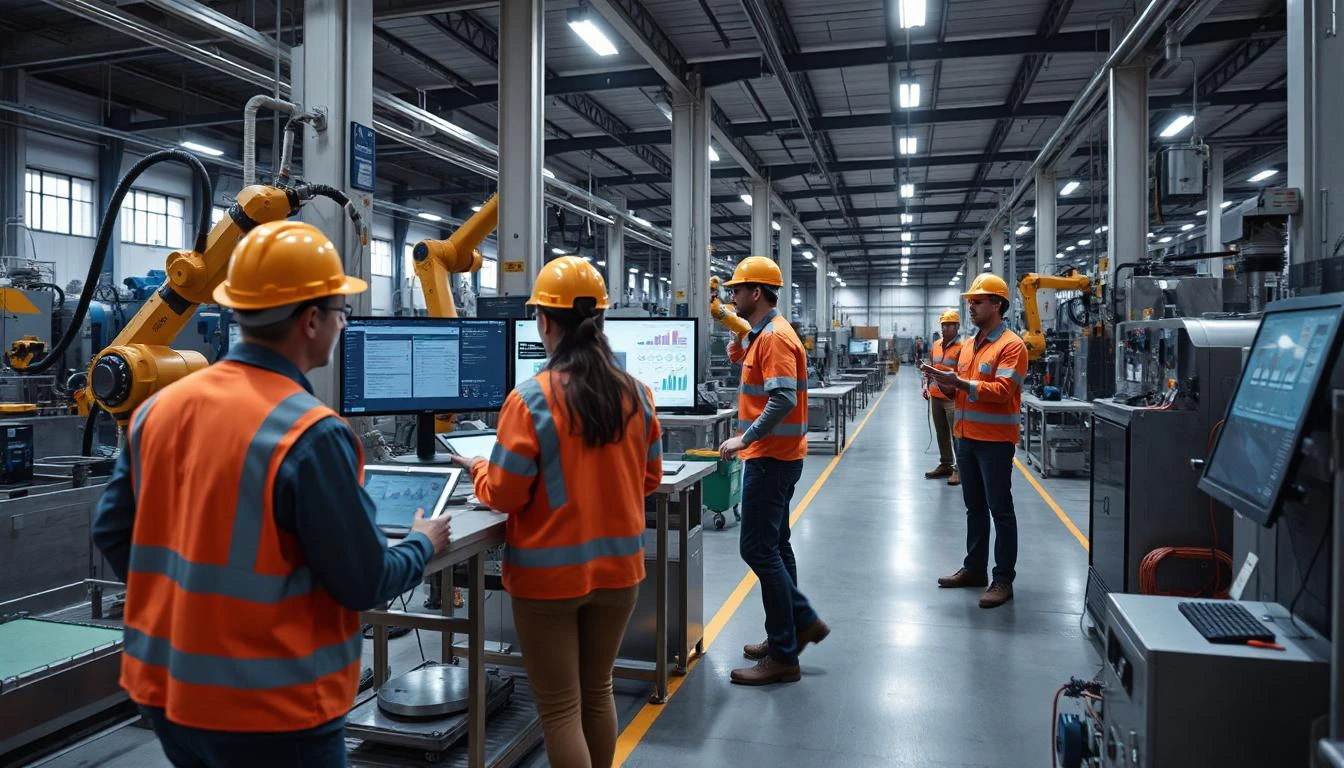
The global manufacturing landscape is shifting faster than ever, driven by intelligent systems, automation breakthroughs, and digital transformation. Factories are no longer static production sites, they are becoming adaptive ecosystems that respond to real-time data and global demand changes.
In this evolving environment, modern industry machines have become the backbone of innovation, reshaping how industries operate, compete, and scale across international markets. These machines now integrate advanced sensors, AI algorithms, and automated control systems that redefine efficiency standards.
The Evolution Of Industrial Machines
Industrial progress has always been tied to technological breakthroughs, and today’s transformation is the most dynamic yet. From mechanical tools to fully automated smart systems, manufacturing has entered a new era where intelligence is embedded into machines themselves.
The rise of interconnected systems and intelligent automation has redefined production logic across industries worldwide. This transformation is strongly influenced by evolving consumer demand and global supply chain complexity.
Industrial production technology has become a key driver of efficiency, enabling factories to transition from rigid workflows to adaptive and data-driven operations that continuously optimize performance.
Transition from manual to automated systems
Early industrial environments relied heavily on human labor and mechanical effort, limiting production scale and speed. Over time, automation replaced repetitive manual tasks, introducing programmable systems that improved accuracy and reduced operational inconsistencies.
Growth of smart manufacturing technology
The emergence of smart systems has transformed factories into digital ecosystems. Technologies like IoT integration, cloud-based monitoring, and machine learning enable seamless communication between machines and production units, making operations more fluid and intelligent.
Increasing demand for efficient production machines
Global competition has increased pressure on industries to produce faster, cheaper, and more efficiently. This demand has accelerated innovation in machine design, leading to systems capable of predictive maintenance and energy optimization.
Modern Trends In Industrial Machines
The industrial sector is undergoing a radical transformation shaped by digital intelligence and sustainable engineering practices. Machines are no longer isolated tools but interconnected nodes within a larger digital production network.
The integration of data analytics, robotics, and AI is redefining what efficiency means in manufacturing environments. This shift is making production systems more resilient and adaptive to global disruptions.
The continuous evolution of modern industry machines reflects the growing need for flexibility, precision, and sustainability in modern production ecosystems.
Artificial intelligence in factory operations
AI is revolutionizing how factories operate by enabling real-time decision-making and predictive analytics. Machines can now detect inefficiencies, forecast maintenance needs, and optimize production flow without human intervention.
As Dr. Michael R. Levin states, “Artificial intelligence in manufacturing is not replacing humans, it is amplifying human decision-making capability at industrial scale.”
Robotics and automated production lines
Robotic systems are now central to modern production environments, handling complex assembly tasks with precision and consistency. Automated production lines reduce dependency on manual labor while increasing output reliability.
Energy efficient industrial machinery systems
Sustainability has become a core priority in industrial design. Energy-efficient machines reduce environmental impact while lowering operational costs, making them essential in modern industrial planning.
According to engineer Sarah Thompson, “The future of manufacturing depends on how efficiently we can merge productivity with sustainability without compromising either.”
Benefits Of Advanced Industrial Machines
Modern manufacturing systems are delivering transformative benefits across productivity, safety, and operational efficiency. These advancements are reshaping how industries structure their workflows and manage resources.
The integration of intelligent systems ensures that factories are not only faster but also more precise and resource-efficient than ever before.
Improving production speed and accuracy
Automation allows production systems to operate continuously with minimal errors. Machines execute repetitive tasks with precision, ensuring consistent product quality across large-scale operations.
Reducing operational costs in factories
Advanced systems optimize resource usage, reduce waste, and minimize downtime through predictive maintenance and intelligent scheduling. This significantly lowers overall production expenses.
Enhancing workplace safety and reliability
By assigning hazardous tasks to machines, factories significantly reduce workplace risks. Human workers now focus more on supervision and system optimization rather than physical exposure to dangerous environments.
Explore Modern Industrial Machine Trends Today
The future of manufacturing is being shaped by continuous innovation in automation, AI integration, and smart production systems. Industries that adopt these advancements early gain a competitive advantage in scalability, efficiency, and global market responsiveness.
A leading insight from industrial analyst David H. Morgan highlights this shift clearly: “Manufacturing competitiveness in the next decade will depend on how deeply companies integrate intelligent systems into their production chains.”